


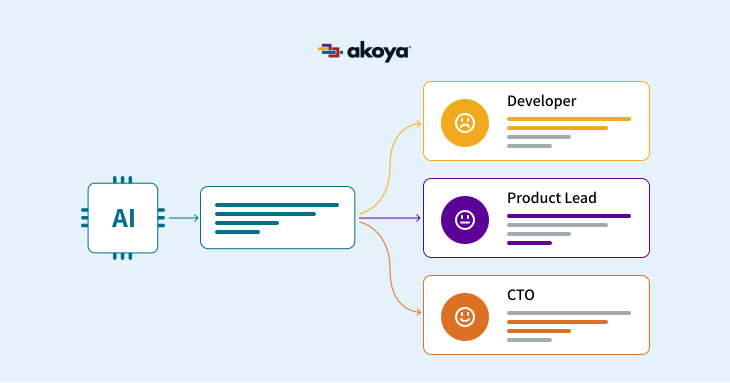
AI is making content work faster: reinforcing style guidance, accelerating audits, drafting documentation. The goal is simple. Free people up from repetitive tasks so they can focus on the work that requires judgment. That reallocation frees people up for higher-value work.
At Akoya, we're experimenting with AI across our organization, and content is no exception. That means using it to move faster on drafts, audits, and research, while staying deliberate about where human review happens. We're equally committed to keeping human expertise in the loop, because that's where AI consistently falls short.
The way we use AI reflects that balance. We don't hand a topic to a model and publish what comes back. We use AI to surface gaps in existing content, and produce first drafts that a person then edits, redirects, or sometimes sets aside entirely. The questions of tone, audience, and emphasis still belong to the people who understand the product and the customers it serves. The process is faster, but the judgment about what ends up in front of customers is still ours.
A large language model doesn't have context. It doesn't know your customers, your audience, or where they get stuck. It might draft a technically accurate walkthrough and sequence every step in the order a developer would think of it, not the order a new user needs. It might explain a compliance requirement correctly and frame it entirely wrong for the business executive reading it. The words can be right, and the content can still miss the mark.
Good content requires knowing the audience, when a term carries regulatory baggage, when the technically correct answer will confuse more than it clarifies, and when something isn't ready regardless of how polished it looks. Those aren't things a model can assess. AI surfaces options and accelerates the work. People make the calls that determine whether it lands. The two aren't interchangeable and treating them as so is where content quality breaks down.
That's especially true in financial services. Precision and trust both carry real weight here. The stakes of a missed nuance are higher than in many other industries. A fintech integrating an API and a bank evaluating a data-sharing program need the same information framed very differently. A sentence that reassures a developer that a process is lightweight and fast might alarm a compliance officer looking for evidence of rigor. A clear explanation of consent flows means one thing to a product manager and something entirely different to a legal team. Those distinctions live inside a team, not inside a model. Open finance is an ongoing program rather than a one-time project. It's reviewing, gathering feedback, refining, and updating. AI can accelerate that cycle. It doesn't replace the decisions at the center of it.
Integrating AI into your content workflow? Ask your team for the context the model doesn’t have. People still decide what matters.
.png)
.svg)